
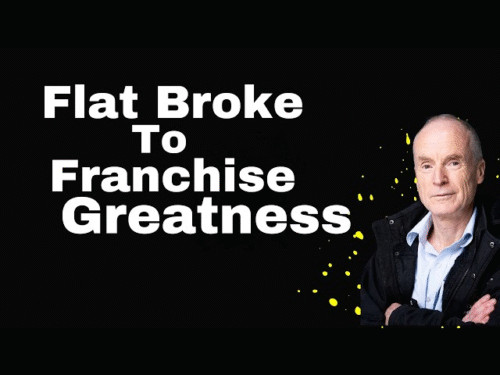
I never set out to build a franchise empire.
My journey began with a simple lawn mowing business—just me, a mower, and a desire to earn a living while pursuing my PhD in history.
I had no idea that this side hustle would one day grow into one of Australia’s largest franchising chains.
Back then, I was deep in debt, and I wasn’t confident in my people skills.
But I believed in service.
I believed in hard work.
I believed that helping others succeed was the key to building something meaningful.
Seeing the Opportunity in Service
Even today, I remind people: don’t underestimate the power of the service industry.
Everyone’s chasing tech and internet businesses, but jobs like cleaning, gardening, and dog washing are essential, and they’re full of potential.
I learned that firsthand.
While others dismissed these “basic” jobs, I saw opportunity.
My gardening and mowing business started bringing in decent income.
That’s when I realized I could make it a full-time venture—and support the research I cared so deeply about.

From Academia to Entrepreneurship
I always thought I’d be an academic.
I had developed a theory about the rise and fall of civilizations, and I was convinced it had real merit.
But I couldn’t prove it—not yet.
Academia wasn’t open to my ideas.
So I pivoted.
I needed a way to fund my research.
Lawn mowing became my path, not just to financial stability, but to building something much larger than I ever imagined.
Building a Franchise: A Customer-First Approach
As my business grew, I saw the potential in franchising.
But I didn’t want to build a typical franchise.
I wanted to build something I would actually want to join.
That meant putting franchisees first, even ahead of short-term profits.
“If I can turn my franchisees into raving fans,” I told myself, “I’ll succeed.”
That became my mission.
Facing Challenges Head-On
In the late 1980s, VIP, a major franchising company, moved into my space.
I knew I had to act fast.
I showed up at their expo, determined to understand how they operated—and how I could do it better.
Nine months later, I launched a new system built around franchisee success.
I gave potential customers direct access to my existing franchisees so they could hear real feedback.
I built everything around service and support.
By the end of the first year, we had 60 franchisees.
From there, we grew faster than I ever expected.
Leading with Servant Leadership
What guided me was servant leadership, rooted in my Christian values.
I’ve been a Christian for decades, and that foundation taught me that true leadership means putting others first.
That meant:
- Personally following up on customer complaints
- Requiring franchisees to go above and beyond—texting customers, not just calling
- Penalizing myself $100 if I didn’t return a franchisee’s call within 24 hours
- Holding regular training and meetings to foster the community

It worked.
Our complaint rate dropped below 1%—nearly unheard of in our industry.
Making the Tough Calls
There were times I had to turn down potential franchisees who were ready to pay.
But I couldn’t, in good conscience, bring someone into the system unless I truly believed they’d succeed.
“It’s a moral decision,” I’ve said many times.
“If I’m not convinced someone can make it, I won’t take their money.”
This principle cost me in the short term, but in the long run, it built trust, loyalty, and a network of people who know I have their backs.
Sharing What I’ve Learned
People often ask why I’m so open about our systems and approach.
It’s simple: ideas grow when shared.
I’ve invited anyone interested in franchising to come to Australia and train with us.
The course is affordable, and I’m not afraid of competition.
Why? Because when you share ideas, you multiply them.
When you help others, you get stronger.
Understanding People
To lead well, I believe you need to understand what motivates others.
Even when someone behaves badly, I ask: why? What’s driving this?
That kind of empathy helps me better serve my franchisees, customers, and yes, even competitors.

Living With Purpose
At the heart of it all is purpose.
For me, it’s not about happiness or wealth.
It’s about living the mission I believe God gave me—loving my family, supporting my franchisees, and funding research that I hope will benefit humanity.
I live by this belief: “No other success can compensate for failure in the home.”
My family, my faith, my research, and my business—they all flow from that core principle.
Final Thoughts
My story isn’t about lawn mowing.
It’s about building a life of purpose.
I believe every person has the capacity to do something meaningful.
If you focus on serving others, stay grounded in your values, and refuse to cut corners, you’ll not only succeed, you’ll make a difference.