

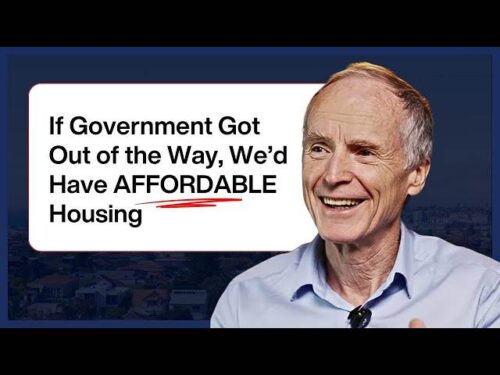

Jim Penman believes Australia’s affordable housing crisis is the result of restrictive zoning and excessive regulation, not a lack of land.
In this episode, Jim explains how removing government barriers could reduce prices, lower rents, and improve living standards.
His message is clear and practical, offering solutions rooted in economics, real examples, and global comparisons.
Introduction
This episode of Conversations with Jim Penman focuses on the affordable housing crisis in Australia.
Jim explains why the housing market has reached a breaking point and why governments keep applying the wrong solutions.
Housing affects every Australian.
It shapes family stability, financial well-being, and long-term security.
Jim argues that simple changes could make homes affordable again.
To learn more about Jim’s ideas and community initiatives, visit the Jim’s Group’s official website.
Many Australians blame migration, investors, or interest rates.
Jim says the real cause is zoning and government restrictions that limit where and how people can build.
What Problem Was Jim Trying to Solve With His Housing Policy?
Jim says the core issue is simple.
The government will not allow people to build homes where they are needed.
If the government got out of the way, stopped the stupid zoning, we would have affordable housing, affordable rent.
He explains that housing prices are now double what they should be.
Rents are far higher than necessary.
Most families cannot enter the market without enormous debt.
Key points from Jim:
- Housing is unaffordable for ordinary families.
- Zoning rules prevent new homes near jobs and transport.
- A small number of property owners benefit while most Australians suffer.
According to the Australian Bureau of Statistics, 67 percent of renters experience housing stress when rents exceed 30 percent of household income.
Why Does Jim Say Zoning Is the Root Cause of the Affordable Housing Crisis?
Jim argues that zoning determines everything.
When land cannot be developed, the home supply collapses.
How Zoning Pushes Prices Higher
- Large blocks cannot be subdivided.
- New homes are pushed far from transport and jobs.
- Families are forced into long commutes.
The government says you only have five-acre covenants. That is just stupid.
Jim even gives his own land as an example.
Under relaxed zoning, his five-acre property could house thirty families near transport and shops.
Global Comparisons That Support Jim’s View
Jim compares cities with strict zoning to cities with open zoning:
- San Francisco has extreme zoning and extreme prices.
- Houston has minimal zoning and much lower prices.
He notes that Houston receives more migrants than San Francisco, proving migration is not the problem.
What Insights Did Jim Share About Government Subsidies and Current Housing Policies?
Jim says subsidies only make the situation worse.
The worst way to deal with this whole thing is to put more and more subsidies.
Why Subsidies Fail
- A 5 percent deposit only creates bigger debt.
- Tax breaks increase prices instead of lowering them.
- Subsidies shift costs onto ordinary taxpayers.
Jim argues that a better solution is inexpensive housing, not expensive houses with bigger loans.
What Would Actually Reduce Prices
- Allow smaller, denser housing near transport.
- Remove unnecessary planning delays.
- Permit modern building materials approved in other countries.
He cites Auckland and Minneapolis as cities that saw lower rents after zoning reform.
How Does This Help Ordinary Australians and Young Families?
Jim says owning a home is essential for a secure life.
Young Australians are locked out of the market, and many face lifelong renting.
Why Affordable Housing Supports Families
- Stability improves child well-being.
- Lower debt reduces stress and financial pressure.
- Families can choose homes near work and school.
Jim explains that even renters would benefit from lower prices because rents fall when supply increases.
You should not have to have a rich father to be able to afford to buy a house.
What Lessons Emerged From Jim’s Discussion About Government Efficiency and Bureaucracy?
Housing is part of a broader issue.
Jim says government processes are slow, inefficient, and costly.
How Bureaucracy Makes Homes More Expensive
- Planning approvals take months.
- Councils impose inconsistent rules.
- Australian standards block safe, lower-cost materials are used overseas.
Jim praises the Texas model, where private town planners can approve applications if councils delay for more than thirty days.
Why Efficiency Matters
- Faster approvals and lower costs for families.
- Developers pass delays to homebuyers.
- Transparent systems reduce corruption and political influence.
Jim also shares examples from his public service experience to show how inefficiencies inflate costs.
What does Jim believe is the main cause of Australia’s housing crisis?
Jim says restrictive zoning and excessive regulation are the root causes of unaffordable housing and high rents.
Does Jim support subsidies for homebuyers?
No. He argues that subsidies increase debt and fail to fix underlying supply issues.
What does Jim recommend instead of zoning restrictions?
He recommends simple, flexible zoning that allows people to build near transport, schools, and employment.
Does migration cause higher housing prices?
Jim says no. He cites Houston, which welcomes many migrants yet remains affordable.
Why does Jim criticise planning bureaucracy?
He believes slow approvals and complex standards add years of cost to homebuilding.
Key Takeaways
- Zoning, not migration, is the main driver of the affordable housing crisis.
- Subsidies do not lower prices because they do not increase supply.
- Removing planning delays would reduce costs for families and investors.
- International examples show that zoning reform works quickly.
- Jim believes efficient government is essential for long-term housing affordability.
Want to hear Jim’s full insights?
Watch the podcast episode to learn why zoning reform, not subsidies, is the key to fixing Australia’s affordable housing crisis.
Want more updates from Jim Penman?
Visit jimpenman.com.au to subscribe to his newsletter and follow his research on policy, economics, and community wellbeing.