
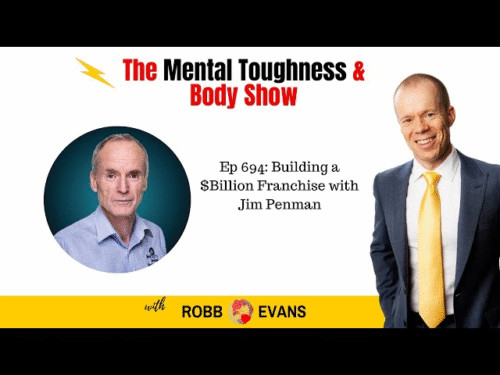
From Academic to Entrepreneur
I never intended to become an entrepreneur.
My original plan was to pursue an academic career—I spent years earning a PhD in history and researching the rise and fall of civilizations.
But I soon realized that the research I wanted to do, especially into biology and human behavior, required funding I didn’t have.
I needed another way to support it.
So in 1982, I took what had been my part-time student job mowing lawns and turned it into a full-time business.
Over the next few years, I hired subcontractors and slowly built a customer base.
By 1989, I took the leap into franchising, and that’s when “Jim’s Mowing” began to evolve into something much bigger.
Building a Franchise Juggernaut
My decision to franchise wasn’t just about ambition—it was about survival.
I had seen a big competitor, VIP, take over my local market.
I didn’t want to get crushed, so I decided to fight back by building my own franchise system.
What started with just a handful of franchises has now become Australia’s largest franchise operation.
Today, we have nearly 5,500 franchisees across Australia, New Zealand, and Canada.
But I didn’t stop at lawn mowing—we’ve expanded into more than 50+ service divisions, from dog washing and cleaning to pest control and fencing.
The secret to all of this?
I’ve always focused on the well-being of our franchisees.
I treat them as partners, not profit centers.
That mindset has shaped everything we do.
Franchisee-First Philosophy
I’ve implemented systems to empower our franchisees in real, tangible ways:
- They can vote out their franchisors—including me.
- They have veto power over changes to their operations manuals.
- They’re free to switch to another brand if they want.
- They can grow their business as large as they choose.
- I personally handle complaints and intervene when needed.

We also provide extensive training, support, and resources.
It’s not about controlling people—it’s about helping them succeed.
As a result, Jim’s Group now generates around $1 billion in annual revenue.
Our average franchisee earns just under $3,000 a week, and 92% of them report being satisfied, with only 8% struggling financially.
Surviving COVID-19
The pandemic was brutal for us, especially during Victoria’s lockdowns.
Every day, I heard from franchisees who were desperate, scared, and in some cases, broken.
I’ll never forget one man who lost everything and still offered to help others.
Or those I supported with free accommodation and meals when they were facing eviction.
But through that hardship, something beautiful emerged: our community.
Franchisees supported each other, our mental health focus became stronger, and I learned to be more careful and strategic in how I dealt with public messaging.
The hardest moment in our company’s history wasn’t even the pandemic.
It was when one of our franchisees in WA committed a horrific act—killing his wife, three daughters, and mother-in-law.
I can still feel the grief in the room when we learned about it.
Innovation and Expansion
I’m not one to sit still.
Even while weathering crises, I’ve stayed focused on innovation.
We’ve launched a registered training organization to build a pipeline of skilled franchisees in fencing and pest control.
We’re also exploring international expansion—especially into the U.S., where I believe we have real potential.
Our new software platform excites me the most.
I truly believe we’ll be able to cut customer complaints in half by redesigning processes and using smarter technology.
That means better outcomes for everyone.
Mental Health Matters
Running a business isn’t just about money—it’s about people.
That’s why I take mental health seriously.
I’ve supported franchisees through marriage breakdowns and homelessness.
I’ve ensured my staff and franchisees have access to counseling services.
I’ve even considered putting a psychologist on the team permanently.
For me, it’s personal. I read 2–3 books a week on topics like history, psychology, and human behavior.
I check in regularly with my team.
I spend quality time with my 10 children.
This isn’t just business—it’s life.
I want to make sure our people are healthy and supported.

Lessons I’ve Learned
If you’re thinking about building something of your own, here’s what I’ve learned:
- Put people first. Focus on helping your franchisees thrive, and the rest will follow.
- Diversify and adapt. I never stuck to just one service—we’ve always evolved.
- Invest in mental wellbeing. Your people are your biggest asset—support them.
- Stay flexible. Change is constant. The ability to pivot has kept us strong.
- Build a great team. I couldn’t have done this without smart, capable people around me.
From mowing lawns as a broke student to building a billion-dollar franchise empire, my journey has never been easy, but it’s been worth it.
When you lead with service, focus on values, and never stop learning, amazing things can happen.